
L'archeologo e il gioielliere: Livio Pontieri
Pyrgos Mavroraki Smelting and Melting Experiments in a Metallurgical Workshop of the Second Millennium BC
Persistent Identifier https://exarc.net/ark:/88735/10577 Author(s) Maria Rosaria Belgiorno Livio Pontieri Publication Date 2021-05-26 EXARC Journal Issue 2021/2
Interpreting the cultural influences of Cyprus in antiquity has posed an issue, depending on one’s point of view or the different conclusions reached. Until the 1970s, in large part due to the extensive excavations along the northern coast of Cyprus, it seemed reasonable to recognise a plethora of Aegean traits in the island culture. Every element of the Cypriot Bronze Age was analysed and interpreted in a manner that led to comparisons with Aegean civilisations (Buchholz and Karageorghis, 1973; Acts of the International Archaeological Symposium, 1979). However, after the political upheavals in 1974, most archaeologists moved their attention to the southern part of Cyprus, and a different historical landscape came into view (Karageorghis. 1986). Links found between Cyprus and other Levantine countries, with a strong influence from the seafront civilisations, (including Egypt) were recognizable (Michaelides, Kassianidou and Merrillees, 2009). These links confirmed the island played an important role in the commercial traffic of the Eastern Mediterranean, where copper was one of the most sought-after goods (Acts of the International Archaeological Symposium, 1982). This was 2/15 likely the reason for the inhabitants of the island to learn of its extensive metal resources and led them to metallurgy, albeit centuries later than other Mediterranean civilisations (Erez, 2018, chapters 5, 10, 18, 19).
Introduction
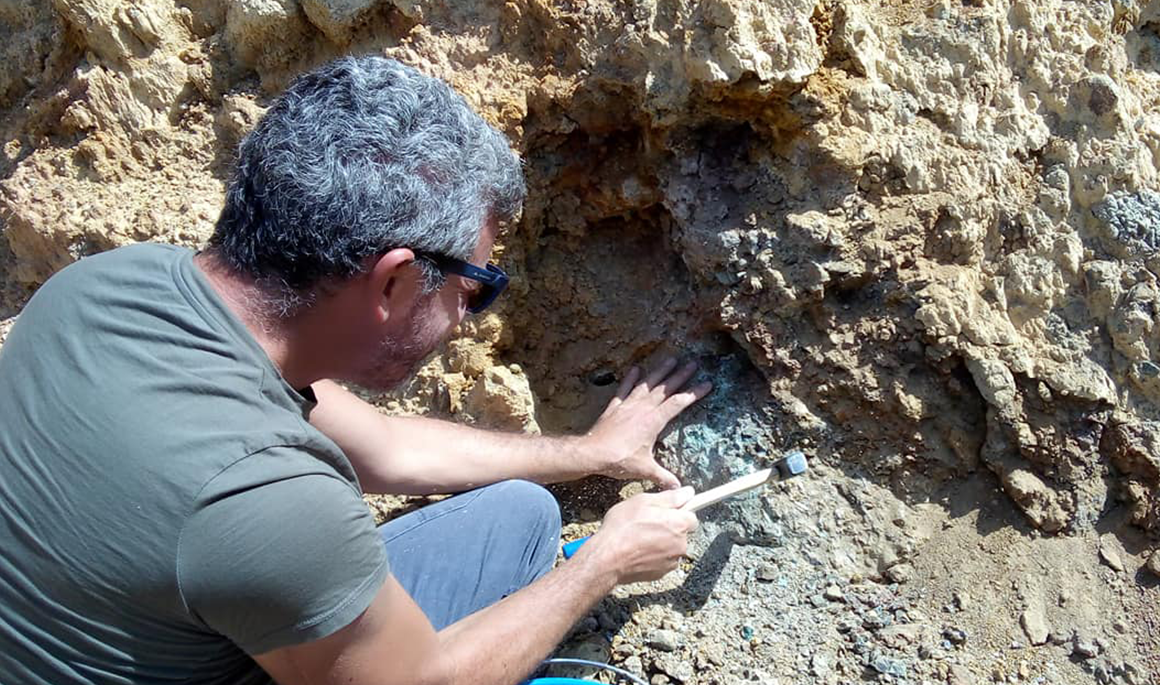
The question of when Cyprus began producing and exporting copper remained unanswered to this day and doubts concerning whether the copper ox-hide ingot was invented by the Cypriots (Hauptmann, Laschimke and Burger, 2016). While Cyprus was involved in the first attempts of small-scale copper production, the civilisations of the Aegean islands, of Anatolia and of the Near East Levant, possessed more advanced technology in smelting and casting copper alloys (Tylecote 2002, pp.18-34). The knowledge gap suggested trade between Cyprus and these regions wasn’t as pronounced before the beginning of the second millennium BC, however, evidence of trading existed, as Neolithic Cyprus possessed Anatolian and Aegean obsidian (Moutsiou, 2019). Around the middle of the second millennium BC, the inhabitants of Cyprus learned to smelt sulphide ores, and started producing large quantities of copper for export, paid duty (at around 1470 BC Cyprus paid a tribute of 108 copper ingots to Pharaoh Thutmoses III) with ingots, that weighed approximately 30 kg (65 pounds) each (Kalyanaraman, 2017). The shape of the ingots was the ox-hide and suggested a connection to a Cypriot religion (Knapp, 1986). However, the discovery of several ox-hide ingots made of non-Cypriot copper at the Ulu-burun shipwreck, sunk about 1300 BC, brought into question whether Cypriots were the inventors of this shape of ingot and whether perhaps the Mycenaeans, Phoenicians, Assyrians, Egyptians, Persians and Romans were as interested in the mineral resources of Cyprus, as scholars often claim (Stampolidis and Karageorghis, 2003). In this context, the excavations at the Pyrgos/Mavroraki site gained a greater significance, as a noteworthy relic of Cypriot metallurgical history. The structures and materials uncovered at Pyrgos/Mavroraki indicated a metallurgical site, positioned in a unique geological position, rich in copper outcrops and watercourses (Morel, 1964; Panthakis, 1967). The mines located in the surrounding area created an axis that ran parallel to the coastline, corresponded in alignment with the modern villages of Aghios Tychonas, Parekklisha, Pyrgos, Monì, Monagroulli, Asgata and Kalavassos. However, no other Early Middle Bronze age settlement of the extent of Pyrgos/Mavroraki had been found in the area, suggested the site was the district’s main copper factory, where the minerals extracted from the different mines converged, possibly after being preliminarily roasted (Belgiorno, 2017, Fig. 4). Pyrgos/Mavroraki was an archaeological site with a number of structures that aid in our understanding of ancient metallurgy. The industrial nature of the site had given it significance and it formed part of a landscape publicly accepted as having a special cultural meaning (Cyprus Today, 2008). The area was full of resources with a special meaning to Cypriot history and held great potential to becoming an interpretive and public education instrument and a tourist attraction. The Bronze Age settlement was in a favourable position, situated on the slope of a low hill (Mavroraki) in the middle of a valley was formed by a stream crossing. In its proximity were both the largest ancient harbour Amathounte, and three smaller sheltered anchorages. Pyrgos aided us in understanding how the Limassol region developed and provided important findings for understanding the Early-Middle Bronze age (Belgiorno, 2017, pp.1-34, 45-93). The Pyrgos area had been classified as a protected area by the Department of Antiquities in 2002, due to its great cultural significance. A number of plots (almost 2 hectares) were expropriated to be used for further archaeological investigations. Evidence of the first settlement at the end of the Chalcolithic period was found along the ridge on the north-western side of the excavated area, the medium slopes of the Mavroraki hill (Belgiorno, 2017, p.15). The structures that emerged corresponded to laboratories and workshops, producing cosmetics, bronze, textiles and wine. The remains of thousands of copper reduction nuggets, fragments of crucibles, clay moulds, stone anvils, stone tools and pit furnaces dated to the first two centuries of the second millennium BC were found at the site and presented a unique opportunity to enrich our knowledge of ancient metallurgy and to arrive at new historical suggestions. The absence of a trunk-conical furnace at the site suggested that the copper ore was a mix of minerals, easily recognised due to its green colour on the upper outcrop stratification (Brown, Mackenzie and Gainsford, 1984, pp.23- 32). To answer ongoing questions regarding the findings of the Pyrgos/Mavroraki site, the Perfume Theme Park Museum of Cyprus offered its premises and support in the context of an experimental archaeology season focused on proving the functionality of the Pyrgos furnaces using original Cypriot copper ores and replicas of the tools and implements discovered at the site. In order to recover just 400 grams of copper, 20-30 kilos of copper ore were used, just as in the Bronze Age (Rademakers, 2015).
Commenti
Nessun commento in questo momento!
Lascia il tuo commento